
Perfume PDFs are digital guides offering instructions and formulations for crafting fragrances at home, empowering enthusiasts to explore DIY perfumery.
These resources often include recipes, like the 107 found in one book, and techniques for creating various perfume types, from body sprays to oil-based blends.
What are Perfume PDFs?
Perfume PDFs represent a growing trend in accessible fragrance creation, functioning as downloadable guides packed with information for aspiring perfumers. These documents consolidate knowledge typically found in expensive perfumery courses or extensive literature, making the art of scent-making more democratic.
They often contain detailed formulations, outlining precise ingredient ratios for recreating classic scents or developing entirely new ones. A notable example includes resources offering over one hundred recipes and techniques. These PDFs aren’t merely recipe collections; they serve as comprehensive guides, covering everything from ingredient sourcing to blending instructions.
Essentially, a Perfume PDF is a digital toolkit, empowering individuals to embark on a journey of olfactory exploration and DIY perfumery, offering a convenient and cost-effective alternative to traditional learning methods.
Why Use PDF Guides for Perfume Making?
Perfume PDF guides offer a compelling alternative to traditional perfumery education, providing a cost-effective and convenient learning experience. Unlike expensive courses, these digital resources are often readily available and accessible, democratizing the art of fragrance creation.
They allow for self-paced learning, enabling individuals to explore formulations and techniques at their own speed. Furthermore, PDFs consolidate vast amounts of information – from ingredient sourcing to blending instructions – into a single, portable document.
These guides, like those containing 107 recipes, empower experimentation and customization, fostering creativity in DIY perfumery. They bridge the gap between aspiration and creation, offering a practical pathway to crafting personalized scents.
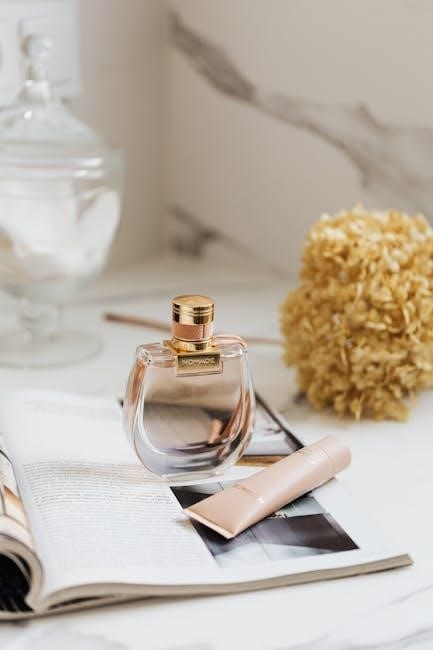
Understanding Perfume Formulation
Perfume formulation, detailed in PDFs, involves combining aroma chemicals and essential oils, guided by ratios and techniques for balanced, appealing fragrances.
Basic Components of a Perfume Formulation
Perfume PDFs consistently highlight that successful fragrance creation relies on understanding core components. These guides detail how formulations generally include a solvent (often alcohol), fragrance compounds – encompassing both natural sources like flowers and synthetic aroma chemicals – and fixatives to enhance longevity.
The documents emphasize that ingredients originate from diverse sources, with blossoms like jasmine and rose being common natural choices. PDFs also explain that end application product formulations vary widely and should be considered general guides; They often present examples, such as “Lovely Violet perfume,” for colognes and toiletries, illustrating how these components interact.
Ultimately, mastering these basic building blocks, as presented in these PDF resources, is crucial for anyone venturing into DIY perfumery.
Top, Middle, and Base Notes Explained
Perfume PDFs universally emphasize the importance of understanding fragrance notes – top, middle, and base – for balanced formulations. Top notes, the initial impression, are light and volatile, quickly evaporating. Middle notes, or heart notes, emerge as top notes fade, forming the fragrance’s core. Base notes provide depth and longevity, lingering longest on the skin.
These guides explain that crafting a harmonious scent requires careful selection of ingredients for each layer. PDFs often detail how these notes interact, creating a complex olfactory experience.
Understanding this structure, as detailed in these resources, is fundamental to successful DIY perfumery, allowing creators to build fragrances with desired character and lasting power.
Accord Creation: Building Fragrance Blocks
Perfume PDFs consistently highlight accord creation as a cornerstone of successful formulation. An accord is a balanced blend of two or more fragrance notes that create a unified scent, functioning as a building block for more complex perfumes.
These guides detail how to combine ingredients – often referencing classic accords like rose-jasmine – to achieve specific olfactory effects. PDFs emphasize that mastering accords allows perfumers to move beyond simply mixing single notes, enabling nuanced and sophisticated creations.
Learning to build these “fragrance blocks” is presented as crucial for replicating existing scents or developing entirely new, signature perfumes, as detailed within these instructional resources.
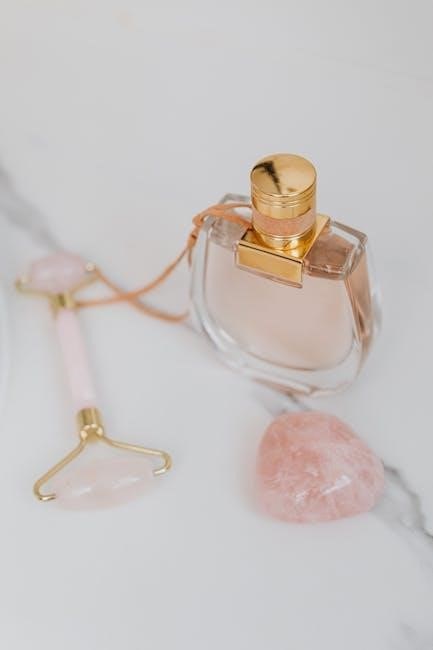
Sourcing Ingredients for Perfume Making
Perfume PDFs detail sourcing both natural ingredients – flowers, woods – and synthetic aroma chemicals, discussing benefits and considerations for each option.
Natural Sources of Perfume Ingredients (Flowers, Woods, etc.)
Perfume PDFs extensively cover utilizing nature’s bounty for fragrance creation. They highlight flowers and blossoms – jasmine, rose, and violet being prominent examples – as traditional and highly sought-after sources of aromatic compounds.
These guides detail how to extract scents from various plant parts, not just flowers, but also woods, resins, roots, and leaves. The information often emphasizes the complexity of obtaining pure, concentrated essences from these natural sources.
PDFs may also discuss the geographical origins of key ingredients, influencing their scent profiles, and the importance of sustainable harvesting practices. Understanding these natural sources is crucial for crafting authentic and nuanced perfumes, as detailed within these instructional documents.
Synthetic Aroma Chemicals: Benefits and Considerations
Perfume PDFs acknowledge the significant role of synthetic aroma chemicals in modern perfumery, detailing both their advantages and potential drawbacks. These guides explain how synthetics offer access to scents unattainable from natural sources, expanding creative possibilities for formulators.

They often discuss the cost-effectiveness and consistency of synthetics compared to natural ingredients, which can vary in quality due to environmental factors. However, PDFs also address considerations regarding safety and potential skin sensitivities associated with certain aroma chemicals.
Information within these resources emphasizes responsible sourcing and understanding the regulatory landscape surrounding synthetic ingredients, ensuring informed and safe perfume creation.
Essential Oils vs. Fragrance Oils: A Comparison
Perfume PDFs consistently dedicate sections to differentiating between essential oils and fragrance oils, crucial for informed DIY perfumery. These guides explain that essential oils are derived directly from plants through methods like distillation, possessing complex aromatic profiles and potential therapeutic benefits.
Conversely, fragrance oils are synthetically created, offering a wider range of scents – including those impossible to extract naturally – and often a more potent, longer-lasting aroma. PDFs highlight that fragrance oils are generally more affordable and consistent in scent.
Resources detail considerations for choosing between the two, factoring in desired scent complexity, budget, and potential skin sensitivities.
Types of Perfume Products You Can Make (from PDFs)
Perfume PDFs detail crafting diverse products: body sprays, lighter body mists, portable solid perfumes, and traditional, long-lasting oil-based perfumes, offering varied formulation options.
Body Sprays: Simple & Quick Formulations
Body sprays, as detailed in many perfume PDFs, represent the most accessible entry point into DIY perfumery due to their straightforward formulations and rapid creation process. These typically involve a high proportion of water or alcohol, acting as the carrier for a lower concentration of fragrance oils or essential oils.
PDF guides often emphasize the simplicity of body spray creation, requiring minimal ingredients and equipment. They frequently provide basic recipes, outlining precise ratios for blending fragrance components with the liquid base. This makes them ideal for beginners eager to experiment with scent combinations without complex procedures.
The quick formulation time is a significant advantage, allowing for immediate enjoyment of a personalized fragrance. These sprays are perfect for a light, refreshing scent throughout the day, though their longevity is generally shorter compared to other perfume types.
Body Mists: Lighter Fragrance Options
Perfume PDFs frequently feature body mists as a step up from body sprays, offering a slightly more refined, yet still light, fragrance experience. These formulations generally maintain a high water or alcohol content, but often incorporate ingredients designed to enhance the scent’s diffusion and overall feel.
Guides detail how body mists differ from sprays through the potential addition of humectants like glycerin, which can provide a subtle moisturizing effect on the skin. Recipes within these PDFs emphasize achieving a delicate, airy scent profile, ideal for everyday wear.
Compared to stronger perfume concentrations, body mists provide a subtle fragrance that doesn’t overwhelm, making them suitable for those preferring a more understated aroma. They represent a convenient and affordable way to enjoy personalized scents.
Solid Perfumes: Portable & Convenient
Perfume PDFs often showcase solid perfumes as an excellent entry point into DIY perfumery, prized for their portability and ease of application. These formulations typically involve blending fragrance oils or essential oils with a solid carrier like beeswax, shea butter, or cocoa butter.
Guides detail the benefits of solid perfumes, highlighting their spill-proof nature and suitability for travel. Recipes emphasize achieving the correct wax-to-oil ratio for optimal consistency and scent throw. The PDFs often provide instructions for packaging in compact containers.
Solid perfumes offer a discreet and long-lasting fragrance experience, applying directly to pulse points. They represent a convenient alternative to traditional sprays, especially for those seeking a subtle, on-the-go scent option.
Oil-Based Perfumes: Traditional & Long-Lasting
Perfume PDFs frequently feature oil-based perfumes, acknowledging their historical significance and enduring appeal within the art of perfumery. These formulations, considered a traditional method, utilize a carrier oil – often jojoba or fractionated coconut oil – to dilute and suspend fragrance concentrates.
Guides emphasize the longevity of oil-based scents, as the oil helps to bind the fragrance molecules to the skin, resulting in a longer-lasting aroma. PDFs detail blending ratios and maceration techniques to ensure proper integration of the oils.
These perfumes are typically applied directly to pulse points, offering a warm and intimate fragrance experience. They are often favored by those seeking a natural and skin-friendly alternative to alcohol-based sprays.
Key Techniques & Instructions Found in Perfume PDFs
Perfume PDFs provide detailed instructions on blending, dilution ratios, maceration, and aging processes, alongside guidance on hedonic testing for fragrance evaluation.
Blending & Dilution Ratios
Perfume PDFs emphasize the critical importance of precise blending and dilution ratios for successful fragrance creation. These guides detail how to combine fragrance components – top, middle, and base notes – in harmonious proportions, often expressed as percentages.
Understanding these ratios is fundamental, as they directly impact the perfume’s strength, longevity, and overall scent profile. PDFs often provide starting points for dilution, suggesting appropriate concentrations of fragrance oils or aroma chemicals in a carrier substance like alcohol or oil.
They also highlight that end application product formulations can vary widely and should be considered general guides, requiring adjustments based on individual preferences and ingredient quality. Careful adherence to recommended ratios is crucial for achieving a balanced and appealing fragrance.
Maceration & Aging Processes
Perfume PDFs consistently highlight maceration and aging as vital steps in perfume development, often overlooked by beginners. Maceration involves allowing the blended perfume concentrate to rest for a period, enabling the ingredients to fully integrate and harmonize.
These guides detail varying maceration times, ranging from weeks to months, depending on the complexity of the formula. Aging, a subsequent process, further refines the fragrance, smoothing out harsh edges and deepening the scent profile.
PDFs explain that these processes allow molecules to interact, creating a more rounded and nuanced aroma. Patience is key, as proper maceration and aging significantly enhance the perfume’s quality and longevity, transforming a simple blend into a sophisticated fragrance.
Hedonic Testing: Evaluating Fragrance Appeal
Perfume PDFs emphasize the importance of hedonic testing – evaluating a fragrance’s appeal to others – as a crucial step in the formulation process. This isn’t simply about personal preference; it’s about gauging broader market acceptance.
Guides detail methods for conducting blind tests, where participants evaluate fragrances without knowing their composition. PDFs often suggest gathering feedback on various aspects, like initial impression, longevity, and overall pleasantness.
Understanding consumer preferences, through market research surveys, is highlighted as key to optimizing perfume formulations. This iterative process, involving feedback and refinement, ensures the final product resonates with a wider audience, maximizing its potential success.
Resources & Books on Perfume Formulation (Mentioned in PDFs)
Perfume PDFs frequently cite “Handbook of Perfumes with Formulations” as a detailed guide, alongside recommending other specialized perfumery books for deeper knowledge.
“Handbook of Perfumes with Formulations” ⸺ A Detailed Guide
Perfume PDFs consistently highlight the “Handbook of Perfumes with Formulations” as an invaluable resource for aspiring perfumers. This comprehensive book serves as a detailed directory, not only providing numerous perfume formulations but also listing manufacturers and suppliers of essential plant equipment.
It’s considered a cornerstone text, offering a wealth of information for understanding the complexities of fragrance creation. The guide details various scent profiles and provides practical recipes, enabling individuals to recreate classic fragrances or develop their own unique blends. Many PDF resources reference its formulas as a starting point for experimentation and learning the art of perfumery.
The handbook’s extensive coverage makes it a frequently recommended resource within the DIY perfume community, bridging the gap between theoretical knowledge and practical application.
Other Recommended Perfumery Books
While the “Handbook of Perfumes with Formulations” is a primary recommendation within perfume PDF guides, several other texts enhance the learning experience. These resources often complement the practical instructions found in PDFs, offering deeper dives into fragrance theory and creation techniques.
PDFs frequently suggest exploring books that cover market research and fragrance trends, crucial for understanding consumer preferences and developing commercially viable scents. Resources focusing on natural perfumery are also highlighted, emphasizing the art of blending essential oils and botanical extracts.
These supplementary books provide a broader context for the formulations presented in PDFs, empowering enthusiasts to move beyond simple replication and towards innovative perfume design.

Safety Precautions When Working with Perfume Ingredients
Perfume PDFs emphasize safe handling of essential oils, proper dilution to avoid skin sensitivity, and awareness of potential allergic reactions during formulation.
Handling Essential Oils Safely
Perfume PDFs consistently highlight the importance of cautious handling when working with concentrated essential oils. These potent natural extracts require respect and adherence to safety guidelines. Always store essential oils in dark glass bottles, away from direct sunlight and heat, to preserve their quality and prevent degradation.
Many guides recommend performing a patch test before widespread application, applying a diluted amount to a small skin area to check for sensitivities or allergic reactions. PDFs also stress the need for proper ventilation during blending, as some oils can be irritating to the respiratory system.
Never ingest essential oils, and keep them out of reach of children and pets. Detailed PDF resources often provide specific safety data sheets (SDS) for each oil, outlining potential hazards and first aid measures.
Dilution & Skin Sensitivity

Perfume PDFs universally emphasize the critical role of dilution to mitigate skin sensitivity. Essential oils are highly concentrated and can cause irritation, photosensitivity, or allergic reactions when applied undiluted. Guides detail appropriate dilution ratios, typically ranging from 1-5% for topical application, using carrier oils like jojoba or fractionated coconut oil.
These resources often explain that individual skin sensitivity varies, necessitating careful testing. Performing a patch test – applying a small, diluted amount to the inner arm – is consistently recommended before using a new formulation extensively.
PDFs also caution against using phototoxic oils (like bergamot) before sun exposure, as they can increase the risk of sunburn. Proper dilution isn’t just about safety; it also impacts fragrance longevity and complexity.

Advanced Perfume Formulation Concepts (from PDFs)
Perfume PDFs delve into perfume families – floral, woody, oriental – and highlight the importance of market research for understanding current fragrance trends and consumer preferences.
Understanding Perfume Families (Floral, Woody, Oriental, etc.)
Perfume PDFs often categorize fragrances into distinct families, providing a foundational understanding for formulation. Floral perfumes, as the name suggests, center around flower scents like jasmine and rose, offering sweet and romantic profiles.
Woody fragrances utilize notes of sandalwood, cedarwood, and vetiver, creating earthy and grounding aromas. Oriental perfumes, also known as amber fragrances, are rich and warm, featuring spices, resins, and vanilla.
Other common families include Fresh (citrus, aquatic), Fruity (berry, apple), and Chypre (moss, patchouli). Understanding these classifications, as detailed in various PDF guides, allows perfumers to predict how different notes will interact and create balanced, harmonious compositions. This knowledge is crucial for developing unique and appealing scents.
Market Research & Fragrance Trends
Perfume PDFs increasingly emphasize the importance of market research for successful fragrance creation. Understanding current fragrance trends is vital, as highlighted in resources discussing the development of women’s fine fragrances. Analyzing consumer preferences and identifying emerging scent profiles can significantly impact a perfume’s appeal.
PDF guides suggest conducting surveys to gauge consumer interest and pinpoint popular notes. Staying abreast of industry reports and competitor analysis is also recommended. This data-driven approach ensures formulations align with market demands, maximizing potential for success.
Ultimately, informed perfume formulation, guided by thorough research, increases the likelihood of creating a commercially viable and desirable fragrance.



About the author